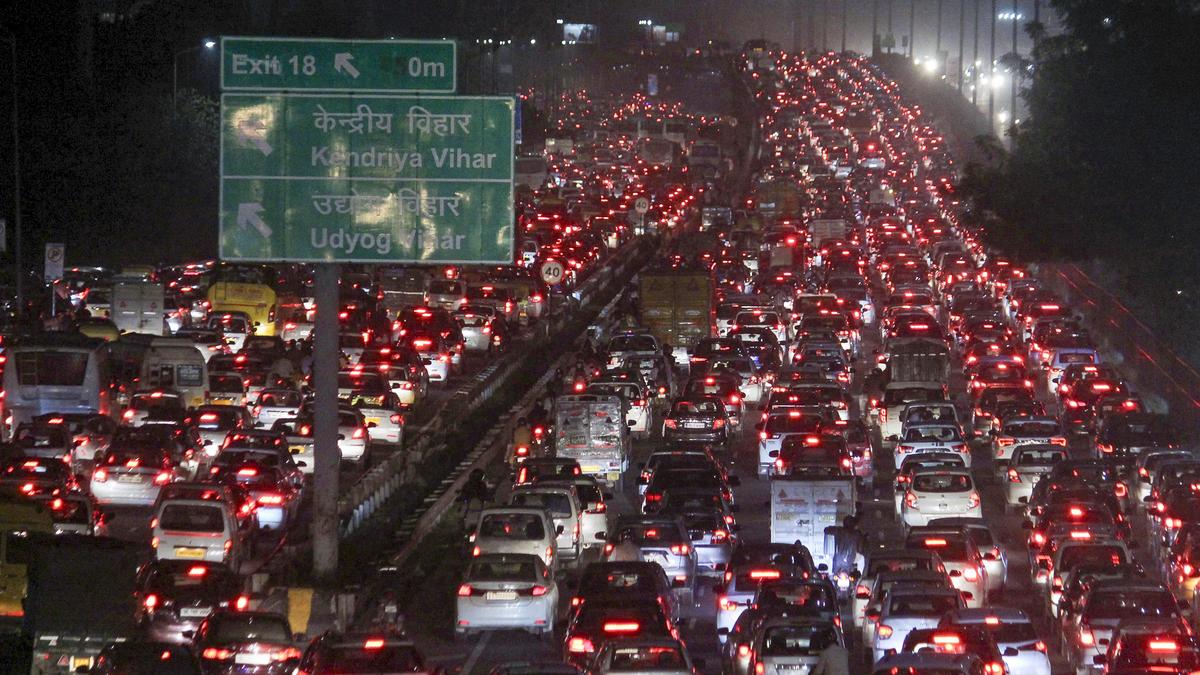
The Mahipalpur flyover on National Highway-48, used by lakhs of commuters daily according to Delhi Traffic Police estimates, has become a major traffic bottleneck on the route linking central Delhi with Gurugram. Vehicles slow down well before reaching the flyover, with queues often extending beyond it and causing long delays.
Commuters described daily ordeals. Gajender Rawat, a private-sector employee travelling from Paschim Vihar to Gurugram, said he spends at least 30-40 minutes crossing the flyover each day, and took over 1.5 hours on Wednesday during peak hours. Denis Gupta, who travels from Rohini to Gurugram, said he now uses the Urban Extension Road despite the longer distance and toll charges to avoid the jams. Commuters have also flagged the problem on social media, calling the flyover a "permanent choke point" and raising concerns over traffic management and passenger pick-ups and drop-offs along the stretch.
According to a traffic police officer, Delhi Traffic Police have proposed a decongestion plan focused on regulating vehicle volumes entering the stretch and improving dispersal beyond it. The plan recommends controlled entry from feeder roads such as Telco Cut and Radisson, channelising merging and U-turn movements, enforcing lane discipline, installing temporary lane delineators and directional boards, prohibiting stopping, pick-ups, drop-offs and unauthorised parking, and deploying personnel at entry points, approaches and the exit.
Officials said the congestion cannot be attributed solely to the flyover's capacity, noting that the carriageway narrows on the flyover even though its entry and exit points are relatively wide. They identified five major contributors: traffic from Vasant Kunj, Mehrauli and Saket entering NH-48 via the Mahipalpur bypass and Telco Cut; airport traffic heading to Gurugram joining near Radisson; local vehicles from Mahipalpur and Rangpuri; Dwarka-bound vehicles making U-turns near Radisson; and multiple infrastructure projects and changing road connectivity in the area. The congestion is a combination of merging, lane-changing and inadequate dispersal beyond the flyover rather than simply a shortage of road space, officials said.