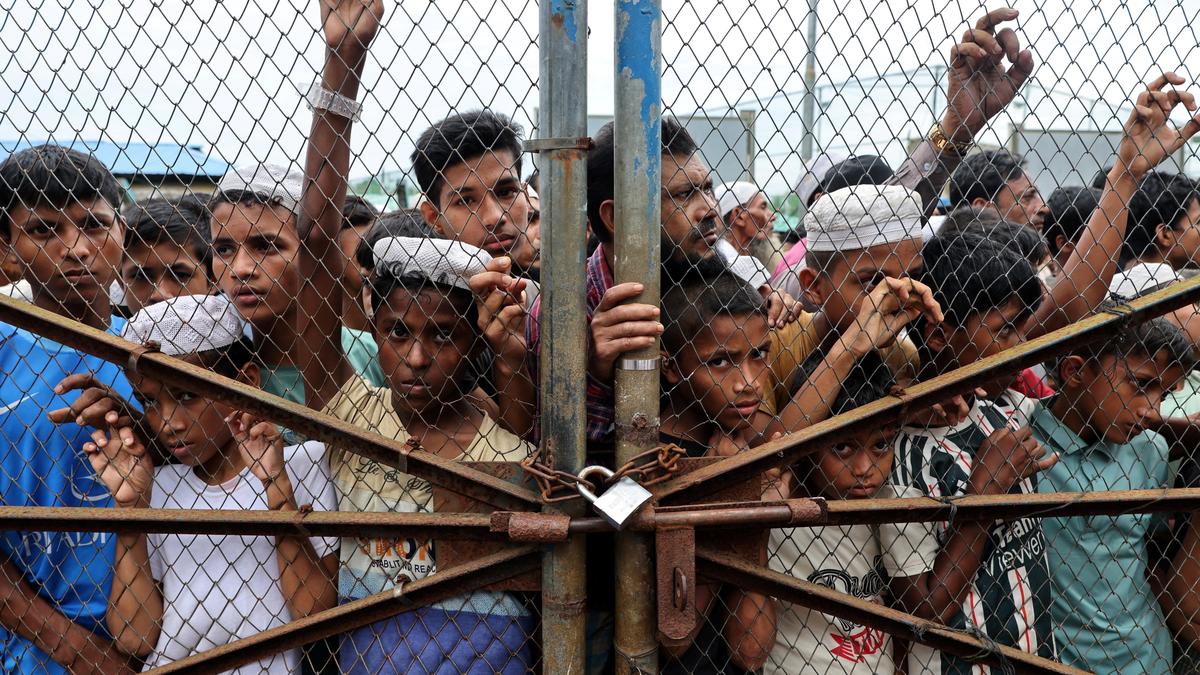
In a first-of-its-kind judgment delivered on November 19, the International Court of Justice (ICJ) held that Myanmar committed genocide against the Rohingya in northern Rakhine State during the military's "clearance operations" in 2017. This is the first time the ICJ has found a state responsible for committing genocide. The ruling was passed by nine votes to six in a case brought by The Gambia in 2019.
The court also found that Myanmar failed to prevent genocide by civilians who joined its forces, failed to punish the perpetrators, never enacted the laws required under the Genocide Convention, and destroyed evidence in breach of the court's 2020 interim order. By 14 votes to one, it rejected the charge that Myanmar directly and publicly incited private persons to commit genocide, but declined to order citizenship for the Rohingya. The judgment holds the state of Myanmar to account but does not convict any individual, and is final and cannot be appealed.
The court ordered Myanmar to investigate and, if warranted, prosecute those responsible, guarantee that the violations will not recur, allow the "safe, voluntary and dignified" return of the displaced, restore their property and compensate the Rohingya. The amount of compensation is to be fixed later, after Myanmar reports back to the court within two years.
The Rohingya are a predominantly Muslim people who speak an Indo-Aryan language close to the Chittagonian dialect. Myanmar's 2014 Census estimated over a million Rohingya in the country, concentrated in Maungdaw, Buthidaung and Rathedaung along the Bangladesh border. Muslims have lived in Rakhine, or Arakan, from the time of the Mrauk U kingdom (15th to 18th century). In 1799, British physician Francis Buchanan recorded that Muslims "long settled in Arakan" called themselves the "Rooinga". Historian Jacques Leider has said the term "Rohingya" took on a political and ethnic meaning in the late 1950s, when Muslim leaders adopted it to claim the status of a "national race". In 1961, Brig. Aung Gyi of the Burmese Army publicly accepted them as an ethnic group, before General Ne Win's 1962 coup heralded decades of military junta rule.