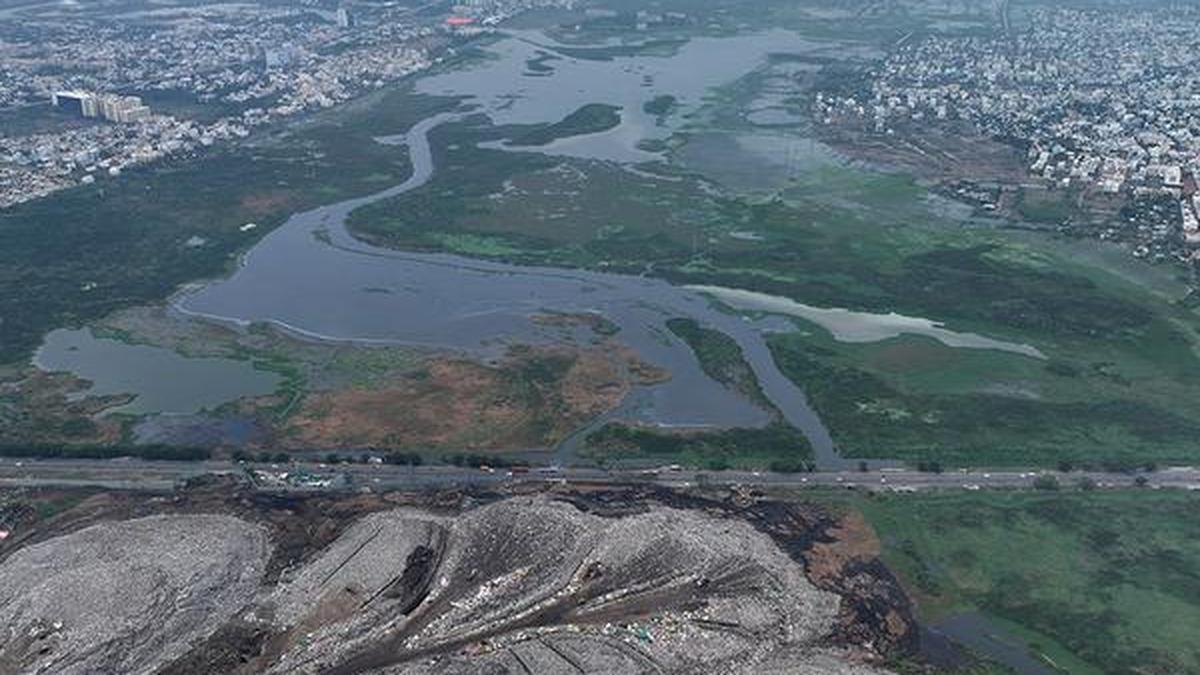
The Confederation of Real Estate Developers' Associations of India (CREDAI) Chennai has said it will approach the Supreme Court against a one-kilometre construction restriction around the Pallikaranai marshland imposed by the National Green Tribunal (NGT). The body expressed disappointment over the Madras High Court's order referring the matter to the Supreme Court after hearing it for over nine months, saying the decision was difficult to comprehend and that there was no new material on record to warrant it.
CREDAI Chennai said the restriction affects not only real estate developers but also over one lakh patta holders whose land titles date back to as early as 1911, further prolonging their wait for justice. It noted that when the petition was filed in February 2026, the court was already aware that the exercise of identifying, demarcating and ground-truthing wetland boundaries across the country was being heard by the Supreme Court in WP(C) No.230 of 2001, and that the petitioner could have been advised to seek relief there during the initial hearings.
According to the association, in compliance with the court's direction of September 7, 2026, the Wetland Authority re-examined the Zone of Influence taking into account hydrological connectivity, drainage pathways, satellite wetlands, land use and the wetland-urban interface, and arrived at an interim Zone of Influence based on historical imagery review, scientific and hydrological study and the regulatory framework. The authority has proposed safeguards against blocking of inlet and outlet channels, natural drains or hydrological pathways and against discharge of untreated sewage into connected water courses, CREDAI said, adding that the Pallikaranai Swamp area (Ramsar site) has not been reduced and continues to be fully protected.
CREDAI said the High Court's decision to refer the matter to the Supreme Court despite a detailed report based on a scientific study by a competent authority came as a surprise. It pointed to precedents for a 0 km Zone of Influence in dense urbanised areas, citing Guindy National Park in Chennai (in the Supreme Court case T.N. Godavarman Thirumulpad vs Union of India) and the East Kolkata wetlands (a Ramsar site), and said a development freeze on over 8,400 acres in a dense urban setting is unheard of.