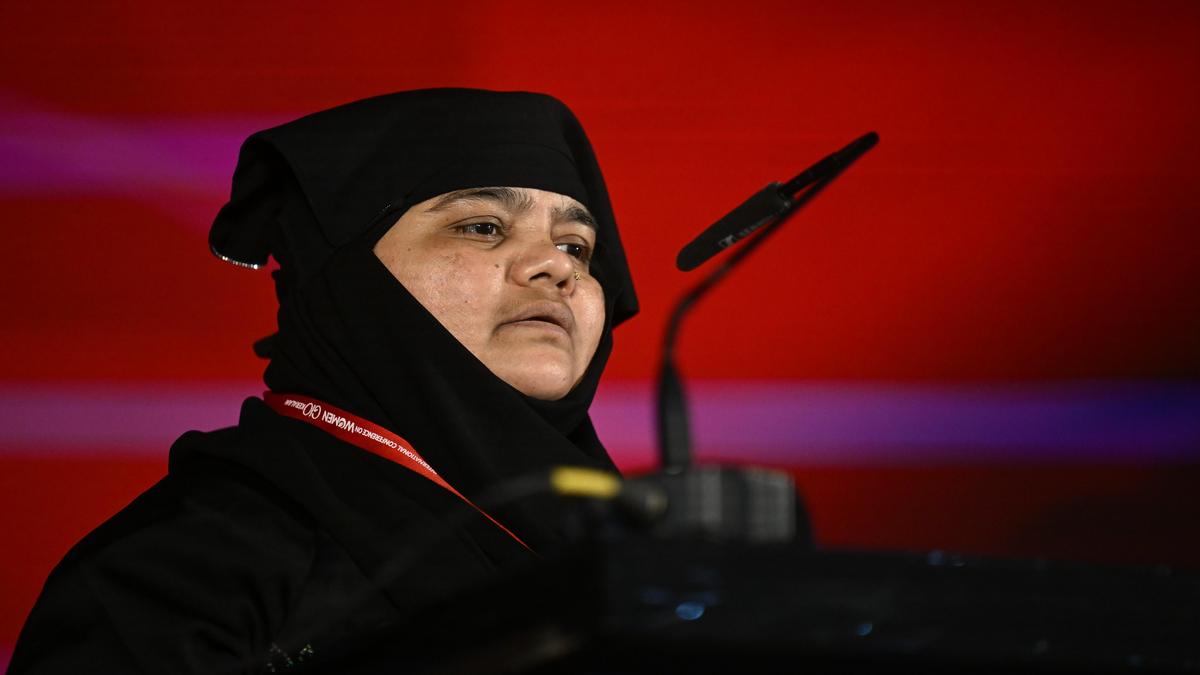
The counsel for two convicts granted bail by the Supreme Court in the 2002 Bilkis Bano gangrape and murder case has rejected her allegation that she was kept in the dark about the proceedings, while warning against attempts to sensationalise a sub-judice matter through a media trial.
Advocate Ayush Anand, counsel for Bipinchand Kanaiyalal Joshi and Pradip Ramanlal Modhiya, issued the statement on November 21. It followed a public statement by Ms. Bano, through her counsel and senior advocate Shobha Gupta, that she was neither informed nor heard before the apex court allowed bail to the two men in an order on October 28. Joshi and Modhiya were two of the 11 men convicted in the 2002 case, in which Ms. Bano, then 19, was gang-raped and 14 members of her family, including her infant daughter, were killed during the riots. The bail order came in their appeal against a 2017 Bombay High Court judgment upholding a 2008 CBI court decision convicting the men and sentencing them to life terms.
Mr. Anand said the allegation of suppression was factually incorrect, according to the statement. He said the matter had been listed on ten occasions before bail was granted and had taken more than a year, and that Ms. Bano's legal team had been aware of and observing the proceedings on the appeals. He said notice in the case was issued in March 2026 and was reported in the media, and that the legal team did not initiate any proceedings at that stage despite the matter being pending.
The counsel said Ms. Bano had not been a party before the Bombay High Court and was accordingly not impleaded in the appeal in the Supreme Court, and had not filed a caveat seeking to be heard. He said her legal team could have exercised available procedural remedies, including seeking impleadment, and the absence of such action cannot be attributed to the petitioners or the court.
The statement referred to the health condition and physical disability of the two men, their age and the 17 years they had spent behind bars — circumstances the court noted while granting them bail and suspending their sentences. Mr. Anand referred to judicial precedents allowing bail on grounds of ill-health and years of incarceration. He said it was unfortunate that, 18 days after the grant of bail, from November 16 onwards, the matter had suddenly been portrayed in a manner suggesting Ms. Bano was unaware of the proceedings, and that such allegations risked creating a misleading impression about the judicial process and the pending criminal appeals.