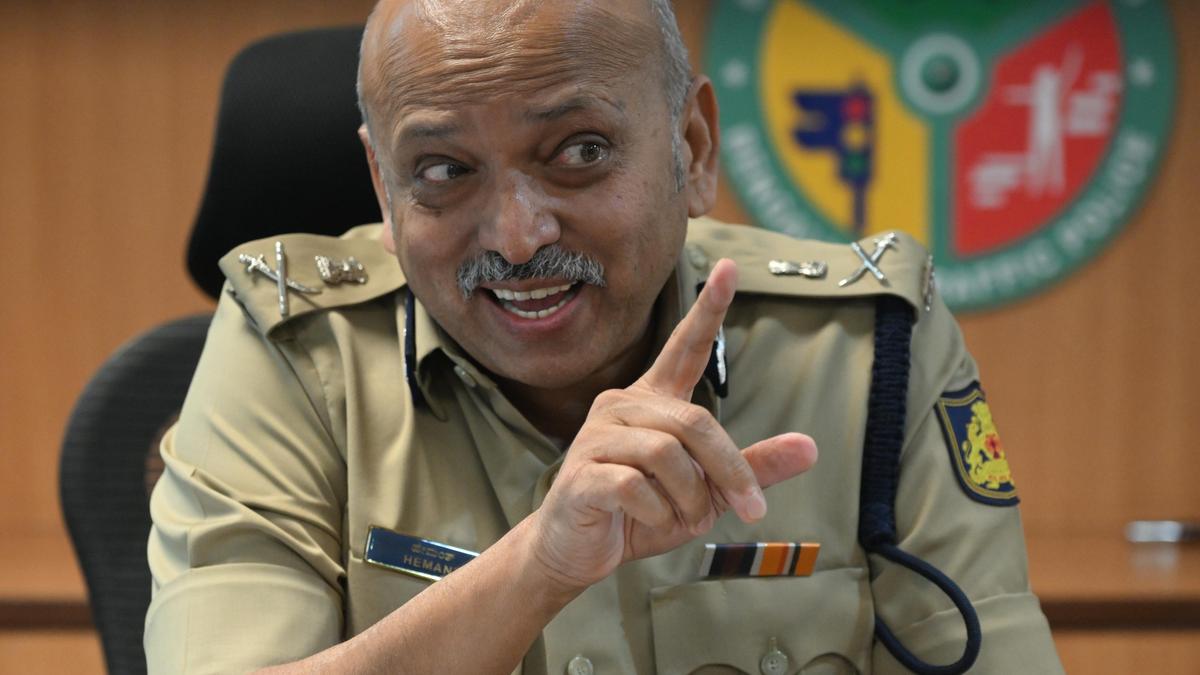
Bengaluru's newly appointed Traffic Commissioner, Hemant M. Nimbalkar, has said that managing traffic rather than enforcement will be his priority. In an interview, he outlined plans to deploy senior officers, including Deputy Commissioners of Police, on the roads during peak hours, with a junction chart drawn up as a roster for officers managing traffic at junctions.
Nimbalkar said officers must focus on managing traffic first, and no vehicle should be stopped unless there is a visible violation, such as riding without a helmet or driving on the wrong side. The practice of stopping vehicles at officers' will is to stop, he said, adding that violations endangering human lives will be dealt with seriously.
On concerns over a dual reporting structure under the restructured Bengaluru City Police administration, he said there is no confusion, as traffic management is both local and pan-city. Each of the five commissionerates has traffic divisions monitored by respective Commissioners, and this decentralisation will help with pragmatic local solutions, while city-level leadership, the Traffic Management Centre and technology deployment address congestion that spills across areas.
Nimbalkar said congestion cannot be beaten through traffic management alone. His approach will combine artificial intelligence, big data analytics, human intelligence and human effort, with personnel at a signal responsible for a stretch of 300–500 metres before it. On heavy vehicles, he said all cannot be stopped from entering the city, but a filtering mechanism can distinguish vehicles carrying essential commodities, with a time-based entry and exit plan explored for others. On civic works, he said coordination with other agencies will be streamlined, and noted that as a member of the Greater Bengaluru Authority, coordination is expected to improve.