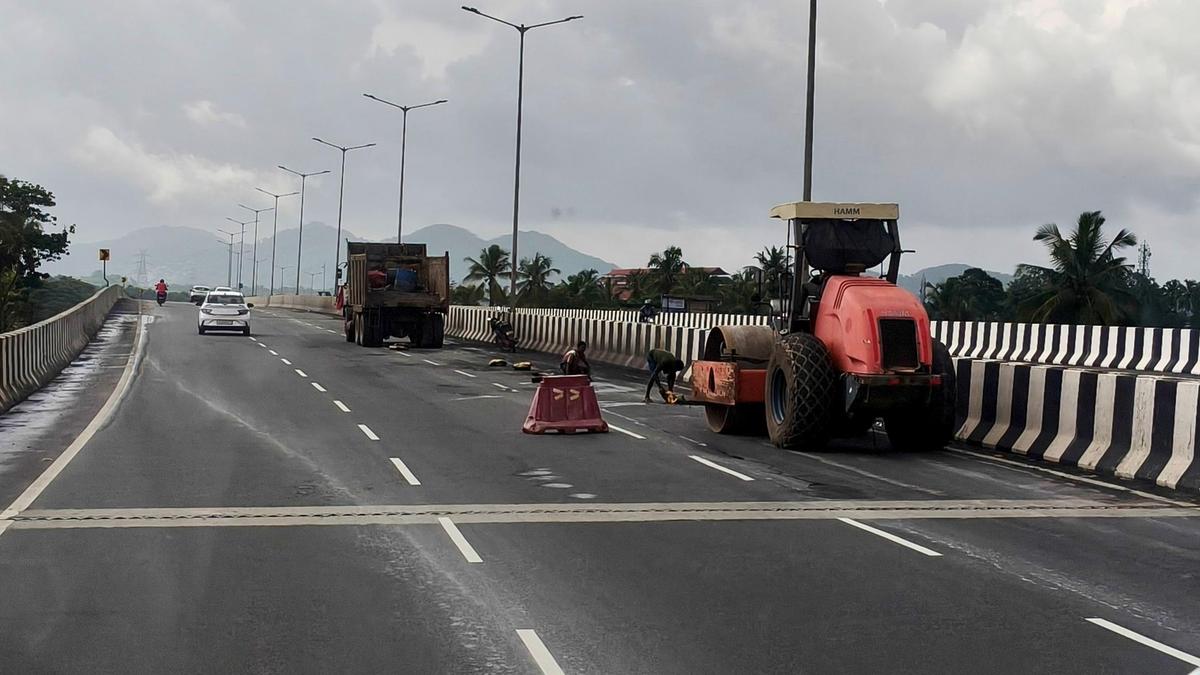
The National Highways Authority of India (NHAI) is rolling out an artificial intelligence-powered analytics system to assess highway conditions, identify damage and follow up with contractors until defects are fixed. NHAI officials detailed the initiative at the 85th Indian Roads Congress in Hyderabad.
Under the system, Dashcam Analytics equipment mounted in patrol vehicles captures geotagged, high-resolution images of road surfaces, pavements and signage and uploads them to a dashboard, where each photograph is assigned a unique number. The information is then passed to the contractor concerned for rectification. Officials described it as an end-to-end "detection to rectification" process.
The system flags potholes and road rutting, or the formation of depressed surfaces, along with edge dropping, uneven shoulders, non-functional streetlights, signage problems and gaps in road medians.
At the same event, Samrat Valani, vice-president of development, operations and customer experience for North America at Transurban, made a case for a clear mandate to halve road deaths by 2030, in line with the Stockholm Declaration on road safety adopted in 2020. He stressed a framework built on the "four Es" — education, engineering, enforcement and emergency care — backed by political will and evidence that initiatives are working. He said data show 54,000 people who were not wearing helmets lost their lives in India last year, and cited Vietnam, where a government-led awareness programme at around 100 schools raised helmet use from 36% to 69% in a year, before it fell to 50% and stabilised at around 57%. He said that in the US, every minute an incident remains on the roadway raises the likelihood of a secondary accident by 2.8%.