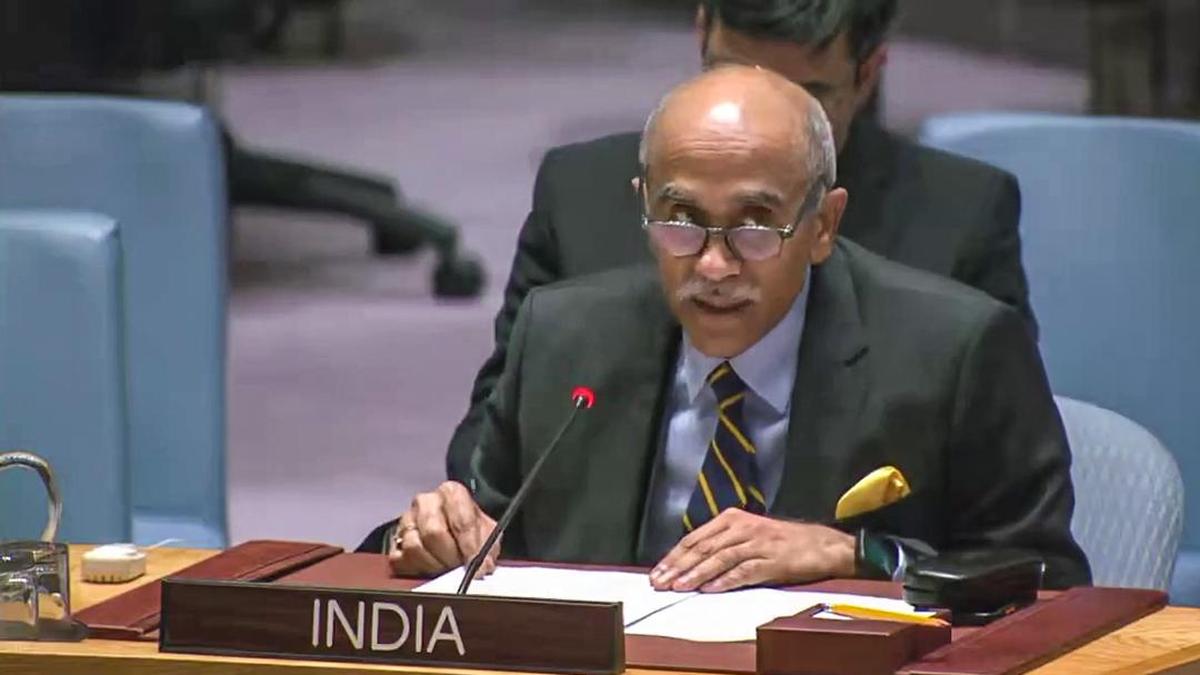
India has cited the 1943 Bengal famine at the UN Security Council to underline that the burden of conflicts falls unevenly on the Global South, and called for steps to prevent food insecurity amid the Ukraine war. India's Permanent Representative to the UN, Ambassador Harish Parvathaneni, made the point at a high-level briefing of the Security Council on Monday on protecting critical energy infrastructure and Black Sea lifelines of global food supply.
Mr. Parvathaneni said developing countries were the worst affected by shortages of food, fuel, fertiliser and energy caused by today's global conflicts. "India has consistently emphasised that the costs of conflict are not shared equally," he said, adding that the implications of the Ukraine conflict, now in its fifth year, were being felt everywhere in an interconnected world.
Referring to the 1943 famine, which killed over three million people, he said it was a stark reminder of the terrible human cost of a distant conflict caused by unchecked wartime priorities and calculations. He recalled Prime Minister Narendra Modi's message that the world must move from endless war to the end of war, and reiterated India's readiness to contribute to efforts towards a peaceful resolution of the conflict.
India expressed concern that conflicts worsen food insecurity by disrupting agriculture, displacing communities, damaging infrastructure and hindering humanitarian access, with knock-on effects on energy, fertiliser supplies, transport and agricultural trade. It urged the Security Council to prioritise humanitarian access, protection of civilian infrastructure and freedom of navigation, and noted that the Black Sea region and India together account for nearly a fifth of global cereal production. Mr. Parvathaneni also flagged concern over merchant vessels and their crews increasingly coming under attack in global conflicts.